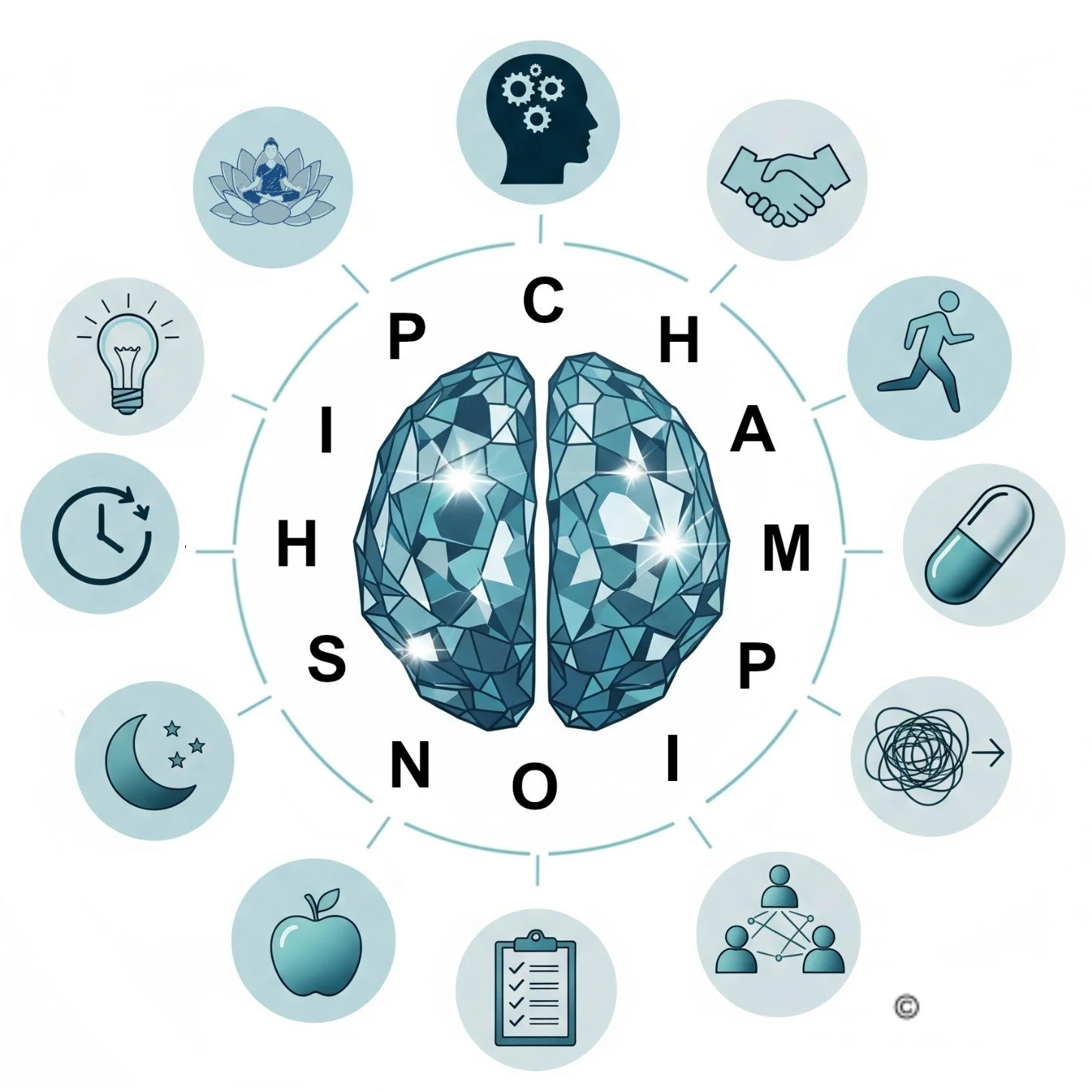
COGNITIVE
RESEARCH
Cognitive Engagement and Neuroplasticity
Cognitive engagement can activate the brain's capacity to restructure and create new neural circuits through neuroplasticity. As Crosson et al5 clarified, the development of the concept of neural plasticity shows that the brain needs active stimulation through experience to restore impaired pathways. This need for active stimulation is supported by Galetto and Sacco6, who showed that cognitive rehabilitation can cause changes to the brain structure and function in patients with brain injury. This entails a daily practice of tasks that require active mental exertion, similar to an athlete training for a physical sport. Training of the executive functions in this manner encourages neuroplasticity, leading to a greater attention span, better memory, and faster processing speed.7
Solving various types of puzzles, like logic problems (e.g. Sudoku), spatial puzzles (e.g. jigsaw), and word-based puzzles (e.g. crossword) strengthens cognitive functions, including memory, problem-solving, and pattern recognition. Trials by Devanand et al8 found that repeated engagement in word-based activities can achieve superior cognitive benefits over other computerized programs in terms of delaying cognitive impairment over the long term.
Learning a new skill, like playing a musical instrument or being proficient in a second language, requires the formation of new neural circuits. Bialystok et al9 found that the lifelong practice of using another language remodels specific brain networks, leading to more optimal executive control and higher cognitive performance. Zaatar et al10 found that practicing complex musical skills repeatedly can trigger significant structural adaptations and neuroplasticity that can drastically improve overall cognitive function and build cognitive reserve to prevent cognitive decline.
Virtual reality (VR) headsets can also be used for brain rehabilitation to provide stimulating activities, such as virtual sports or simulated escape rooms. Georgiev et al11 showed that VR training can lead to increases in brain cortical gray matter volumes and improved cognitive function, making this an effective tool for neurorehabilitation. VR also promotes spatial and problem-solving skills without the physical risk of actual injury.11 Confirming this finding, Voinescu et al12 concluded that virtual reality provides meaningful, specific, repetitive, safe, and customizable environments for neurorehabilitation.
Reading books and listening to audiobooks following a concussion can promote cognitive plasticity and rebuild concentration. Much like physical overload promotes muscular strength through adaptation, continuously tracking the narrative of the book challenges the brain and promotes cognitive strengthening through resistance training.13 According to Cicerone et al13, the rehabilitation of focus and executive function post-acquired brain injury is possible with structured, evidence-based attention training tasks, including active reading and sustained listening, as the brain is constantly required to parse complex information from the auditory or visual environment. Särkämö et al14 demonstrated that by listening actively on a daily basis, neuroplasticity is promoted in the recovering brain and the attentional abilities of individuals are improved.
In addition, daily auditory exercises improve verbal memory by helping the brain adjust damaged neural networks, which reduces the excessive compensation required for daily information processing.15 Wylie and Flashman15 confirmed the importance of minimizing this cognitive energy expenditure. Cognitive fatigue in patients with traumatic brain injury directly results from overtaxed neural resources, they argue that attentional activities should gradually increase in difficulty to build cognitive endurance.15
Participation in ongoing education can aid in recovery. Taking college or online courses can help with the rehabilitation process because they place a cognitive demand on the neurocompromised brain. This forces the brain to route around damaged neural pathways in a process called compensatory neuroplasticity and to enhance the function of undamaged networks, a process known as neuroplastic reserve.16 According to Stern and Barulli16, by building up a reserve, cognitive demand can protect against further cognitive decline in the brain, thereby decreasing the clinical impact of neuropathology. Sumowski et al17 found that patients with higher levels of education post-traumatic brain injury, despite injury severity, have better cognitive function than those with lower education levels. This was specifically observed in the processing speed, working memory, and episodic memory.17 This theory was applied to the clinical populations by Steward et al18, who supported the findings of the Sumowski et al17 study. Individuals with a higher cognitive reserve, defined pre-injury and post-injury, were better protected from the effects of neuronal degeneration.18
The combination of physical and mental challenges has shown to enhance the recovery process.19 Through a systematic review, Rieker et al19 demonstrated that dual tasks, like interactive dancing and exergaming, are capable of producing synergistic gains in executive function and global cognition by combining physical and cognitive rehabilitation activities at the same time. By engaging the mind and body simultaneously, the brain is able to accelerate neural remodeling. Petzinger et al20 demonstrated that motor training in goal-directed motor skill activities heavily recruits the cognitive networks in the brain by stimulating the expression of brain-derived neurotrophic factors, which aid in synaptic repair and modification.
This training requires the use of a large amount of resources, including coordination, motor memory, and higher executive functions. The brain is forced to compensate for the deficits that occur from the injury. Fritz et al21 demonstrated that motor-cognitive dual-tasking interventions are effective at restoring attentional functioning and divided attention capabilities. The study also concluded that the improvement of cognitive function provides a clinical buffer against further mental and cognitive impairment in patients with cognitive and emotional dysfunction from neurological damage.21