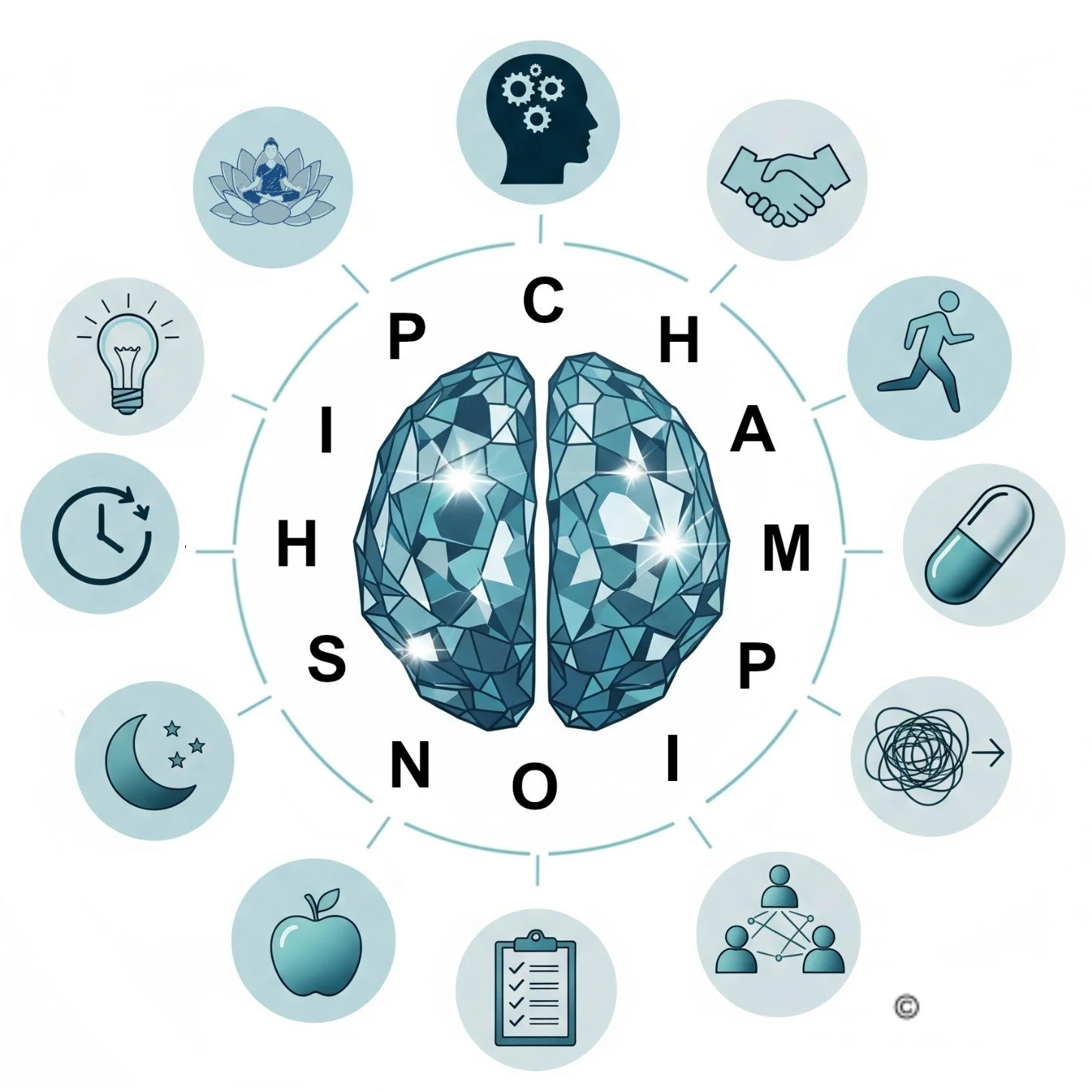
INTERACT
RESEARCH
Social Support and Psychoneuroimmunology
Developing and sustaining relationships helps counteract the social detachment frequently experienced with brain injury symptoms.59 Draper et al59 examined psychosocial results after TBIs and found that loneliness and social disengagement intensify clinical depression and anxiety in the long term. This detachment limits rehabilitation by denying opportunities for engagement and support. A social group, different from a clinical support group, becomes something equivalent to an audience cheering the player from the stands, providing support, belonging, and shared experiences. Tomberg et al60 investigated coping strategies in brain injury patients and discovered that social support acts as one of the main coping mechanisms and serves as a strong moderator for psychological stressors. Struchen et al61 identified the elements involved in social integration and concluded that social communication must be consistently practiced by patients in rehab who hope to establish and maintain these social networks.
There is often noted difficulty in sustaining friendships following a traumatic brain injury. Douglas62 points out that social situations with unpredictable requirements result in prompt fatigue and the leads the patient toward a tendency to withdraw. An event on the calendar that is recurring, like a cup of decaf coffee or tea at a local café each week, creates structure and momentum without adding cognitive load. Ylvisaker et al63 point out that interpersonal interactions in a routine and familiar environment substantially reduce the executive and cognitive burden. To overcome obstacles, clinicians can assist in scheduling social interactions for patients as a routine, helping reduce mental fatigue.
Re-entering social settings following an injury should begin gradually. Togher et al64 state that social and communication rehabilitation needs to be initially conducted within small, controlled, and secure environments to prevent patients from being overwhelmed by larger social situations. Cohen and Wills65 explored the correlation between network size, functional support, and mental health issues and found that a smaller but trusted social group serves as a more effective buffer against depression and psychological hardship. Beginning social efforts with a small social group post-injury is more manageable and builds confidence in the patient. Once the patient gains social confidence with their trusted group, asking group members to bring an additional guest provides a trusted outlet and with slow, controlled social expansion.
Small social gatherings that focus on a common activity or pastime, such as an introductory class or a book club are a simple and accessible methods to establish relationships with others in the community. Willer et al66 conclude that structured participation in community activities creates the foundation to recover social integration after a brain injury. The social encounter centers itself around the shared activity, which lessens anxiety in the encounter.66 Dijkers67 suggests that community volunteerism may offer a structured means of social interactions that provide a sense of belonging. The engagement in community roles provides a significant basis for well-being and successful psychological adaptation during post-injury recovery.67,68 Cicerone and Azulay68 demonstrated that community participation increases patient perceptions of self-efficacy, creating a positive distraction from individual struggles and allowing patients to successfully interact with new people.
In order to remain motivated, patients need to regularly engage in “scoring a point.” Maclean et al68 9ssessed patient motivation and determined that patients with recovery processes focused on achievable personal goals are more motivated in rehabilitation. Levack et al70 found that implementation of goal pursuit strategies can improve self-efficacy and emotional status in rehabilitation. Small victories can instill confidence and deliver the much-needed, positive dopamine feedback to begin moving out of social isolation’s inertial drag.70 Bandura71 established that these small accomplishments constitute a source of self-efficacy. Patients who perceive each interaction as an accomplishment that can be tallied are able to maintain the internalized, positive reinforcement required to persevere with social effort regardless of obstacles that may be encountered along the way.71 Treating each social encounter as an event that can be scored and counted, can help patients replace the defensive, avoidance behaviors of social anxiety with a positive, actionable measure of rehabilitation progress.