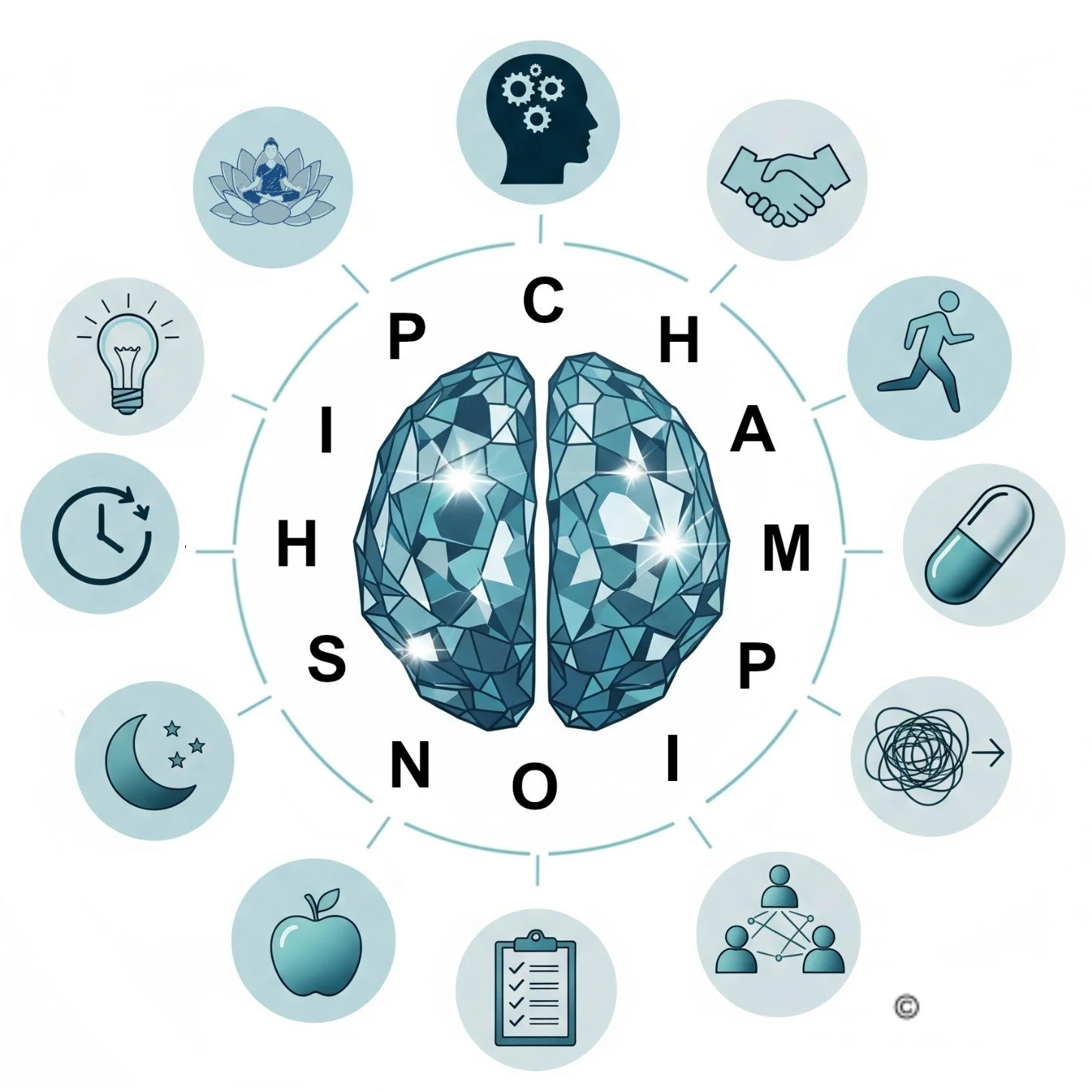
REFERENCES
Introduction and Comparative Efficacy
Contrada M, Arabia G, Vatrano M, et al. Multidomain cognitive tele-neurorehabilitation training in long-term post-stroke patients: an RCT study. Brain Sci. 2025;15(2):145. doi:10.3390/brainsci15020145
Stavitz J, Swan K, Eckart A, et al. Evolution of multifaceted sport-related concussion management: a 25-year narrative review of multidomain assessment and multimodal rehabilitation. Sports. 2026;14(3):112. doi:10.3390/sports14030112
Kontos AP, Collins MW, Okonkwo DO, et al. Targeted Multidomain Treatment for Mild Traumatic Brain Injury: A Randomized Clinical Trial. JAMA Netw Open. 2026 Mar 2;9(3):e261317. doi:10.1001/jamanetworkopen.2026.1317
Rosenberg A, Ngandu T, Rusanen M, et al. Multidomain lifestyle intervention benefits a large elderly population at risk for cognitive decline and dementia regardless of baseline characteristics: The FINGER trial. Alzheimers Dement. 2017;14:263-270. doi:10.1016/j.jalz.2017.09.006
Cognitive
Crosson B, Hampstead BM, Krishnamurthy LC, et al. Advances in neurocognitive rehabilitation research from 1992 to 2017: The ascension of neural plasticity. Neuropsychology. 2017 Nov;31(8):900-920. doi:10.1037/neu0000396
Galetto V, Sacco K. Neuroplastic changes induced by cognitive rehabilitation in traumatic brain injury: a review. Neurorehabil Neural Repair. 2017;31(9):800-813. doi:10.1177/1545968317723748
Nguyen L, Murphy K, Andrews G. Cognitive and neural plasticity in old age: a systematic review of evidence from executive functions cognitive training. Ageing Res Rev. 2019;53:100912. doi:10.1016/j.arr.2019.100912
Devanand DP, Goldberg TE, Qian M, et al. Computerized games versus crosswords training in mild cognitive impairment. NEJM Evid. 2022;1(12). doi:10.1056/evidoa2200121
Bialystok E, Craik FIM, Luk G. Bilingualism: consequences for mind and brain. Trends in Cognitive Sciences. 2012;16(4):240-250. doi:10.1016/j.tics.2012.03.001
Zaatar M, Alhakim K, Enayeh M, Tamer R. The transformative power of music: Insights into neuroplasticity, health, and disease. Brain, Behavior, & Immunity - Health. 2024;35:100716. doi:10.1016/j.bbih.2023.100716
Georgiev DD, Georgieva I, Gong Z, Nanjappan V, Georgiev GV. Virtual Reality for Neurorehabilitation and Cognitive Enhancement. Brain Sciences. 2021;11(2):221. doi:10.3390/brainsci11020221
Voinescu A, Sui J, Stanton Fraser D. Virtual Reality in Neurorehabilitation: An Umbrella Review of Meta-Analyses. Journal of Clinical Medicine. 2021;10(7):1478. doi:10.3390/jcm10071478
Cicerone KD, Langenbahn DM, Braden C, et al. Evidence-Based Cognitive Rehabilitation: Updated Review of the Literature From 2003 Through 2008. Archives of Physical Medicine and Rehabilitation. 2011;92(4):519-530. doi:10.1016/j.apmr.2010.11.015
Särkämö T, Tervaniemi M, Laitinen S, et al. Music listening enhances cognitive recovery and mood after middle cerebral artery stroke. Brain. 2008;131(3):866-876. doi:10.1093/brain/awn013
Wylie GR, Flashman LA. Understanding the interplay between mild traumatic brain injury and cognitive fatigue: models and treatments. Concussion. 2017;2(3):CNC50. doi:10.2217/cnc-2017-0003
Stern Y, Barulli D. Cognitive reserve. Handbook of Clinical Neurology. 2019:181-190. doi:10.1016/b978-0-12-804766-8.00011-x
Sumowski JF, Chiaravalloti N, Krch D, Paxton J, DeLuca J. Education Attenuates the Negative Impact of Traumatic Brain Injury on Cognitive Status. Archives of Physical Medicine and Rehabilitation. 2013;94(12):2562-2564. doi:10.1016/j.apmr.2013.07.023
Steward KA, Kennedy R, Novack TA, Crowe M, Marson DC, Triebel KL. The Role of Cognitive Reserve in Recovery From Traumatic Brain Injury. Journal of Head Trauma Rehabilitation. 2018;33:E18-E27. doi:10.1097/htr.0000000000000325
Rieker JA, Reales JM, Muiños M, Ballesteros S. The effects of combined cognitive-physical interventions on cognitive functioning in healthy older adults: A systematic review and multilevel meta-analysis. Frontiers in Human Neuroscience. 2022;16. doi:10.3389/fnhum.2022.838968
Petzinger GM, Fisher BE, McEwen S, Beeler JA, Walsh JP, Jakowec MW. Exercise-enhanced neuroplasticity targeting motor and cognitive circuitry in Parkinson's disease. The Lancet Neurology. 2013;12(7):716-726. doi:10.1016/s1474-4422(13)70123-6
Fritz NE, Cheek FM, Nichols-Larsen DS. Motor-cognitive dual-task training in persons with neurologic disorders. Journal of Neurologic Physical Therapy. 2015;39(3):142-153. doi:10.1097/npt.0000000000000090
Help
Gómez-de-Regil L, Estrella-Castillo DF, Vega-Cauich J. Psychological Intervention in Traumatic Brain Injury Patients. Behavioural Neurology. 2019;2019:1-8. doi:10.1155/2019/6937832
Alsalaheen BA, Mucha A, Morris LO, et al. Vestibular Rehabilitation for Dizziness and Balance Disorders After Concussion. Journal of Neurologic Physical Therapy. 2010;34(2):87-93. doi:10.1097/npt.0b013e3181dde568
Kontos AP, Deitrick JM, Collins MW, Mucha A. Review of Vestibular and Oculomotor Screening and Concussion Rehabilitation. Journal of Athletic Training. 2017;52(3):256-261. doi:10.4085/1062-6050-51.11.05
van Heugten C, Wolters Gregório G, Wade D. Evidence-based cognitive rehabilitation after acquired brain injury: A systematic review of content of treatment. Neuropsychological Rehabilitation. 2012;22(5):653-673. doi:10.1080/09602011.2012.680891
Dawson DR, Gaya A, Hunt A, Levine B, Lemsky C, Polatajko HJ. Using the Cognitive Orientation to Occupational Performance (CO-OP) with Adults with Executive Dysfunction following Traumatic Brain Injury. Canadian Journal of Occupational Therapy. 2009;76(2):115-127. doi:10.1177/000841740907600209
Laver KE, George S, Thomas S, Deutsch JE, Crotty M. Virtual reality for stroke rehabilitation. Cochrane Database of Systematic Reviews. 2011. doi:10.1002/14651858.cd008349.pub2
Active
Cotman CW, Berchtold NC, Christie LA. Exercise builds brain health: key roles of growth factor cascades and inflammation. Trends Neurosci. 2007;30(9):464-472. doi:10.1016/j.tins.2007.06.011
Hillman CH, Erickson KI, Kramer AF. Be smart, exercise your heart: exercise effects on brain and cognition. Nat Rev Neurosci. 2008;9(1):58-65. doi:10.1038/nrn2298
Erickson KI, Voss MW, Prakash RS, et al. Exercise training increases size of hippocampus and improves memory. Proc Natl Acad Sci U S A. 2011;108(7):3017-3022. doi:10.1073/pnas.1015950108
Cheever K, Kawata K, Tierney R, Galgon A. Cervical Injury Assessments for Concussion Evaluation: A Review. Journal of Athletic Training. 2016;51(12):1037-1044. doi:10.4085/1062-6050-51.12.15
Schneider KJ, Meeuwisse WH, Nettel-Aguirre A, Haley K, Shrier I, Emery CA. Cervicovestibular rehabilitation in sport-related concussion: a randomised controlled trial. Br J Sports Med. 2014;48(17):1294-1298. doi:10.1136/bjsports-2013-093267
Herold F, Hamacher D, Schega L, Müller NG. Thinking while moving or moving while thinking: Concepts of motor-cognitive training for cognitive performance enhancement. Front Aging Neurosci. 2018;10:228. doi:10.3389/fnagi.2018.00228
Leddy JJ, Kozlowski K, Donnelly JP, Pendergast DR, Epstein IG, Willer B. A preliminary study of subsymptom threshold exercise training for refractory post-concussion syndrome. Clin J Sport Med. 2010;20(1):21-27. doi:10.1097/JSM.0b013e3181c6c22c
Leddy JJ, Haider MN, Ellis MJ, et al. Early targeted heart rate aerobic exercise versus placebo stretching for sport-related concussion in adolescents: a randomised controlled trial. Lancet Child Adolesc Health. 2019;3(11):792-799. doi:10.1016/S2352-4642(21)00267-4
Medication
Werner C, Engelhard K. Pathophysiology of traumatic brain injury. Br J Anaesth. 2007;99(1):4-9. doi:10.1093/bja/aem131
Cornelius C, Crupi R, Calabrese V, et al. Traumatic brain injury: oxidative stress and neuroprotection. Antioxid Redox Signal. 2013;19(8):836-853. doi:10.1089/ars.2012.4981
Shekleton JA, Parcell DL, Redman JR, Phipps-Nelson J, Ponsford JL, Rajaratnam SM. Sleep disturbance and melatonin levels following traumatic brain injury. Neurology. 2010;74(21):1732-1738. doi:10.1212/WNL.0b013e3181e0438b
Grima NA, Rajaratnam SMW, Mansfield D, Sletten TL, Spitz G, Ponsford JL. Efficacy of melatonin for sleep disturbance following traumatic brain injury: a randomised controlled trial. BMC Med. 2018;16(1):8. doi:10.1186/s12916-017-0995-1
McCrory P, Meeuwisse W, Dvorak J, et al. Consensus statement on concussion in sport-the 5th international conference on concussion in sport held in Berlin, October 2016. Br J Sports Med. 2017;51(11):838-847. https://doi.org/10.1136/bjsports-2017-097699
Awtry EH, Loscalzo J. Aspirin. Circulation. 2000;101(10):1206-1218. doi:10.1161/01.cir.101.10.1206
Mazaleuskaya LL, Theken KN, Gong L, et al. PharmGKB summary: ibuprofen pathways. Pharmacogenet Genomics. 2015;25(2):96-106. doi:10.1097/FPC.0000000000000113
Ohashi N, Kohno T. Analgesic Effect of Acetaminophen: A Review of Known and Novel Mechanisms of Action. Front Pharmacol. 2020;11:580289. doi:10.3389/fphar.2020.580289
Lipton RB, Stewart WF, Ryan RE, Saper J, Silberstein S, Sheftell F. Efficacy and safety of acetaminophen, aspirin, and caffeine in alleviating migraine headache pain: three double-blind, randomized, placebo-controlled trials. Arch Neurol. 1998;55(2):210-217. doi:10.1001/archneur.55.2.210
Lipton RB, Diener HC, Robbins MS, Garas SY, Patel K. Caffeine in the management of patients with headache. J Headache Pain. 2017;18(1):107. doi:10.1186/s10194-017-0806-2
Echeverri D, Montes FR, Cabrera M, Galán A, Prieto A. Caffeine's vascular mechanisms of action. Int J Vasc Med. 2010;2010:834060. doi:10.1155/2010/834060
Diener HC, Limmroth V. Medication-overuse headache: a worldwide problem. Lancet Neurol. 2004;3(8):475-483. doi:10.1016/S1474-4422(04)00824-5
Drake C, Roehrs T, Shambroom J, Roth T. Caffeine effects on sleep taken 0, 3, or 6 hours before going to bed. J Clin Sleep Med. 2013;9(11):1195-1200. doi:10.5664/jcsm.3170
Richards G, Smith A. Caffeine consumption and self-assessed stress, anxiety, and depression in secondary school children. J Psychopharmacol. 2015;29(12):1236-1247. doi:10.1177/0269881115612404
Pruning
Levine B, Robertson IH, Clare L, et al. Rehabilitation of executive functioning: an experimental-clinical validation of goal management training. J Int Neuropsychol Soc. 2000;6(3):299-312. doi:10.1017/s1355617700633052
Jenkins PO, Mehta MA, Sharp DJ. Catecholamines and cognition after traumatic brain injury. Brain. 2016;139(Pt 9):2345-2371. doi:10.1093/brain/aww128
Bromberg-Martin ES, Matsumoto M, Hikosaka O. Dopamine in motivational control: rewarding, aversive, and alerting. Neuron. 2010;68(5):815-834. doi:10.1016/j.neuron.2010.11.022
Cantor JB, Ashman T, Gordon W, et al. Fatigue after traumatic brain injury and its impact on participation and quality of life. J Head Trauma Rehabil. 2008;23(1):41-51. doi:10.1097/01.HTR.0000308720.70288.af
Ariga A, Lleras A. Brief and rare mental breaks keep you focused: deactivation and reactivation of task goals preempt vigilance decrements. Cognition. 2011;118(3):439-443. doi:10.1016/j.cognition.2010.12.007
Boksem MA, Tops M. Mental fatigue: costs and benefits. Brain Res Rev. 2008;59(1):125-139. doi:10.1016/j.brainresrev.2008.07.001
Cicerone KD, Goldin Y, Ganci K, et al. Evidence-based cognitive rehabilitation: systematic review of the literature from 2009 through 2014. Arch Phys Med Rehabil. 2019;100(8):1515-1533. doi:10.1016/j.apmr.2019.02.011
Levack WMM, Weatherall M, Hay-Smith EJC, Dean SG, McPherson K, Siegert RJ. Goal setting and strategies to enhance goal pursuit for adults with acquired disability participating in rehabilitation. Cochrane Database Syst Rev. 2015;2015(7):CD009727. doi:10.1002/14651858.cd009727.pub2
Wade DT. Goal setting in rehabilitation: an overview of what, why and how. Clin Rehabil. 2009;23(4):291-295. doi:10.1177/0269215509103551
Interact
Draper K, Ponsford J, Schönberger M. Psychosocial and emotional outcomes 10 years following traumatic brain injury. J Head Trauma Rehabil. 2007;22(5):278-287. doi:10.1097/01.HTR.0000290972.63753.a7
Tomberg T, Toomela A, Pulver A, Tikk A. Coping strategies, social support, life orientation and health-related quality of life following traumatic brain injury. Brain Inj. 2005;19(14):1181-1190. doi:10.1080/02699050500150153
Struchen MA, Pappadis MR, Sander AM, Burrows CS, Myszka KA. Examining the contribution of social communication abilities and affective/behavioral functioning to social integration outcomes for adults with traumatic brain injury. J Head Trauma Rehabil. 2011;26(1):30-42. doi:10.1097/HTR.0b013e3182048f7c
Douglas JM. Loss of friendship following traumatic brain injury: a model grounded in the experience of adults with severe injury. Neuropsychol Rehabil. 2020;30(7):1277-1302. doi:10.1080/09602011.2019.1574589
Ylvisaker M, Turkstra LS, Coelho C. Behavioral and social interventions for individuals with traumatic brain injury: a summary of the research with clinical implications. Semin Speech Lang. 2005;26(4):256-267. doi:10.1055/s-2005-922104
Togher L, Wiseman-Hakes C, Douglas J, et al. INCOG recommendations for management of cognition following traumatic brain injury, part IV: cognitive communication. J Head Trauma Rehabil. 2014;29(4):353-368. doi:10.1097/HTR.0000000000000071
Cohen S, Wills TA. Stress, social support, and the buffering hypothesis. Psychol Bull. 1985;98(2):310-357. doi:10.1037/0033-2909.98.2.310
Willer B, Rosenthal M, Kreutzer JS, Gordon WA, Rempel R. Assessment of community integration following rehabilitation for traumatic brain injury. J Head Trauma Rehabil. 1993;8(2):75-87. doi:10.1097/00001199-199308020-00009
Dijkers MP. Quality of life after traumatic brain injury: a review of research approaches and findings. Arch Phys Med Rehabil. 2004;85(4 Suppl 2):S21-S35. doi:10.1016/j.apmr.2003.08.119
Cicerone KD, Azulay J. Perceived self-efficacy and life satisfaction after traumatic brain injury. J Head Trauma Rehabil. 2007;22(5):257-266. doi:10.1097/01.HTR.0000290970.56130.81
Maclean N, Pound P, Wolfe C, Rudd A. The concept of patient motivation: a qualitative analysis of stroke professionals' attitudes. Stroke. 2002;33(2):444-448. doi:10.1161/hs0202.102367
Levack WMM, Weatherall M, Hay-Smith EJC, Dean SG, McPherson K, Siegert RJ. Goal setting and strategies to enhance goal pursuit for adults with acquired disability participating in rehabilitation. Cochrane Database Syst Rev. 2015;2015(7):CD009727. doi:10.1002/14651858.cd009727.pub2
Bandura A. Self-efficacy: toward a unifying theory of behavioral change. Psychol Rev. 1977;84(2):191-215. doi:10.1037/0033-295X.84.2.191
Organize
Gillespie A, Best C, O'Neill B. Cognitive function and assistive technology for cognition: a systematic review. J Int Neuropsychol Soc. 2012;18(1):1-19. doi:10.1017/S1355617711001548
Shum D, Valentine M, Cutmore T. Performance of individuals with severe long-term traumatic brain injury on time-, event-, and activity-based prospective memory tasks. J Clin Exp Neuropsychol. 1999;21(1):49-58. doi:10.1076/jcen.21.1.49.943
Kliegel M, McDaniel MA, Einstein GO. Plan formation, retention, and execution in prospective memory: a new approach and age-related effects. Mem Cognit. 2000;28(6):1041-1049. doi:10.3758/bf03209352
Jamieson M, Monastra M, Gillies G, et al. The use of a smartwatch as a prompting device for people with acquired brain injury: a single case experimental design study. Neuropsychol Rehabil. 2019;29(4):513-533. doi:10.1080/09602011.2017.1310658
Jamieson M, Cullen B, McGee-Lennon M, Brewster S, Evans JJ. The efficacy of cognitive prosthetic technology for people with memory impairments: a systematic review and meta-analysis. Neuropsychol Rehabil. 2014;24(3-4):419-444. doi:10.1080/09602011.2013.825632
Scullin MK, Jones WE, Phenis R, et al. Using smartphone technology to improve prospective memory functioning: a randomized controlled trial. J Am Geriatr Soc. 2022;70(2):459-469. doi:10.1111/jgs.17551
Svoboda E, Richards B, Leach L, Mertens V. PDA and smartphone use by individuals with moderate-to-severe memory impairment: application of a theory-driven training programme. Neuropsychol Rehabil. 2012;22(3):408-427. doi:10.1080/09602011.2011.652498
Mueller PA, Oppenheimer DM. The pen is mightier than the keyboard: advantages of longhand over laptop note taking. Psychol Sci. 2014;25(6):1159-1168. doi:10.1177/0956797614524581
Ose Askvik E, van der Weel FR, van der Meer ALH. The importance of cursive handwriting over typewriting for learning in the classroom: a high-density EEG study of 12-year-old children and young adults. Front Psychol. 2020;11:1810. doi:10.3389/fpsyg.2020.01810
Risko EF, Gilbert SJ. Cognitive offloading. Trends Cogn Sci. 2016;20(9):676-688. doi:10.1016/j.tics.2016.07.002
Grinschgl S, Papenmeier F, Meyerhoff HS. Consequences of cognitive offloading: Boosting performance but diminishing memory. Q J Exp Psychol (Hove). 2021;74(9):1477-1496. doi:10.1177/17470218211008060
Ponsford JL, Ziino C, Parcell DL, et al. Fatigue and sleep disturbance following traumatic brain injury--their nature, causes, and potential treatments. J Head Trauma Rehabil. 2012;27(3):224-233. doi:10.1097/HTR.0b013e31824ee1a8
Nutrition
Valls-Pedret C, Sala-Vila A, Serra-Mir M, et al. Mediterranean diet and age-related cognitive decline: a randomized clinical trial. JAMA Intern Med. 2015;175(7):1094-1103. doi:10.1001/jamainternmed.2015.1668
Lourida I, Soni M, Thompson-Coon J, et al. Mediterranean diet, cognitive function, and dementia: a systematic review. Epidemiology. 2013;24(4):479-489. doi:10.1097/EDE.0b013e3182944410
Sofi F, Abbate R, Gensini GF, Casini A. Accruing evidence on benefits of adherence to the Mediterranean diet on health: an updated systematic review and meta-analysis. Am J Clin Nutr. 2010;92(5):1189-1196. doi:10.3945/ajcn.2010.29673
Gómez-Pinilla F. Brain foods: the effects of nutrients on brain function. Nat Rev Neurosci. 2008;9(7):568-578. doi:10.1038/nrn2421
Morris MC, Tangney CC, Wang Y, Sacks FM, Bennett DA, Aggarwal NT. MIND diet associated with reduced incidence of Alzheimer's disease. Alzheimers Dement. 2015;11(9):1007-1014. doi:10.1016/j.jalz.2014.11.009
Vauzour D. Dietary polyphenols as modulators of brain functions: biological actions and molecular mechanisms underpinning their beneficial effects. Oxid Med Cell Longev. 2012;2012:914273. doi:10.1155/2012/914273
Cryan JF, O'Riordan KJ, Cowan CSM, et al. The microbiota-gut-brain axis. Physiol Rev. 2019;99(4):1877-2013. doi:10.1152/physrev.00018.2018
Weil ZM, Corrigan JD, Karelina K. Alcohol use disorder and traumatic brain injury. Alcohol Res. 2018;39(2):171-180. doi:10.35946/arcr.v39.2.07
Roehrs T, Roth T. Caffeine: sleep and daytime sleepiness. Sleep Med Rev. 2008;12(2):153-162. doi:10.1016/j.smrv.2007.07.004
Sleep
Xie L, Kang H, Xu Q, et al. Sleep drives metabolite clearance from the adult brain. Science. 2013;342(6156):373-377. doi:10.1126/science.1241224
Rasch B, Born J. About sleep's role in memory. Physiol Rev. 2013;93(2):681-766. doi:10.1152/physrev.00032.2012
Besedovsky L, Lange T, Haack M. The sleep immune crosstalk in health and disease. Physiol Rev. 2019;99(3):1325-1380. doi:10.1152/physrev.00010.2018
Vasey C, McBride J, Penta K. Circadian rhythm dysregulation and restoration: the role of melatonin. Nutrients. 2021;13(10):3480. doi:10.3390/nu13103480
Grima NA, Rajaratnam SMW, Mansfield D, Sletten TL, Spitz G, Ponsford JL. Efficacy of melatonin for sleep disturbance following traumatic brain injury: a randomised controlled trial. BMC Med. 2018;16(1):8. doi:10.1186/s12916-017-0995-1
Shekleton JA, Parcell DL, Redman JR, Phipps-Nelson J, Ponsford JL, Rajaratnam SMW. Sleep disturbance and melatonin levels following traumatic brain injury. Neurology. 2010;74(21):1732-1738. doi:10.1212/WNL.0b013e3181e0438b
Okamoto-Mizuno K, Mizuno K. Effects of thermal environment on sleep and circadian rhythm. J Physiol Anthropol. 2012;31(1):14. doi:10.1186/1880-6805-31-14
Chang AM, Aeschbach D, Duffy JF, Czeisler CA. Evening use of light emitting eReaders negatively affects sleep, circadian timing, and next morning alertness. Proc Natl Acad Sci U S A. 2015;112(4):1232-1237. doi:10.1073/pnas.1418490112
McMains S, Kastner S. Interactions of top down and bottom up mechanisms in human visual cortex. J Neurosci. 2011;31(2):587-597. doi:10.1523/JNEUROSCI.3766-10.2011
Irish LA, Kline CE, Gunn HE, Buysse DJ, Hall MH. The role of sleep hygiene in promoting public health: a review of empirical evidence. Sleep Med Rev. 2015;22:23-36. doi:10.1016/j.smrv.2014.10.001
Habits
Grupe DW, Nitschke JB. Uncertainty and anticipation in anxiety: an integrated neurobiological and psychological perspective. Nat Rev Neurosci. 2013;14(7):488-501. doi:10.1038/nrn3524
Cicerone KD, Langenbahn DM, Braden C, et al. Evidence-based cognitive rehabilitation: updated review of the literature from 2003 through 2008. Arch Phys Med Rehabil. 2011;92(4):519-530. doi:10.1016/j.apmr.2010.11.015
Wood W, Rünger D. Psychology of habit. Annu Rev Psychol. 2016;67:289-314. doi:10.1146/annurev-psych-122414-033417
Vohs KD, Baumeister RF, Schmeichel BJ, Twenge JM, Nelson NM, Tice DM. Making choices impairs subsequent self-control: a limited-resource account of decision making, self-regulation, and active initiative. J Pers Soc Psychol. 2008;94(5):883-898. doi:10.1037/0022-3514.94.5.883
Ekers D, Webster L, Van Straten A, Cuijpers P, Richards D, Gilbody S. Behavioural activation for depression; an update of meta-analysis of effectiveness and sub group analysis. PLoS One. 2014;9(6):e100100. doi:10.1371/journal.pone.0100100
Masicampo EJ, Baumeister RF. Consider it done! Plan making can eliminate the cognitive effects of unfulfilled goals. J Pers Soc Psychol. 2011;101(4):667-683. doi:10.1037/a0024192
Wright KP Jr, McHill AW, Birks BR, Griffin BR, Rusterholz T, Chinoy ED. Entrainment of the human circadian clock to the natural light-dark cycle. Curr Biol. 2013;23(16):1554-1558. doi:10.1016/j.cub.2013.06.039
LeGates TA, Fernandez DC, Hattar S. Light as a central modulator of circadian rhythms, sleep and affect. Nat Rev Neurosci. 2014;15(7):443-454. doi:10.1038/nrn3743
Harvey AG. A cognitive model of insomnia. Behav Res Ther. 2002;40(8):869-893. doi:10.1016/s0005-7967(01)00061-4
Risko EF, Gilbert SJ. Cognitive offloading. Trends Cogn Sci. 2016;20(9):676-688. doi:10.1016/j.tics.2016.07.002
Scullin MK, Krueger ML, Ballard HK, Pruett N, Bliwise DL. The effects of bedtime writing on difficulty falling asleep: a polysomnographic study comparing to do lists and completed activity lists. J Exp Psychol Gen. 2018;147(1):139-146. doi:10.1037/xge0000374
Baikie KA, Wilhelm K. Emotional and physical health benefits of expressive writing. Adv Psychiatr Treat. 2005;11(5):338-346. doi:10.1192/apt.11.5.338
Inspiration
Cacioppo JT, Hawkley LC. Perceived social isolation and cognition. Trends Cogn Sci. 2009;13(10):447-454. doi:10.1016/j.tics.2009.06.005
Ozbay F, Johnson DC, Dimoulas E, Morgan CA, Charney D, Southwick S. Social support and resilience to stress: from neurobiology to clinical practice. Psychiatry (Edgmont). 2007;4(5):35-40. PMCID: PMC2921311
Wiese-Bjornstal DM, Smith AM, Shaffer SM, Morrey MA. An integrated model of response to sport injury: psychological and sociological dynamics. J Appl Sport Psychol. 1998;10(1):46-69. doi:10.1080/10413209808406377
Dennis CL. Peer support within a health care context: a concept analysis. Int J Nurs Stud. 2003;40(3):321-332. doi:10.1016/S0020-7489(02)00092-5
Muldoon OT, Walsh RS, Curtain M, Crawley L, Kinsella EL. Social cure and social curse: social identity resources and adjustment to acquired brain injury. Eur J Soc Psychol. 2019;49(7):1272-1282. doi:10.1002/ejsp.2564
Haslam SA, Jetten J, Postmes T, Haslam C. Social identity, health and well-being: an emerging agenda for applied psychology. Appl Psychol. 2009;58(1):1-23. doi:10.1111/j.1464-0597.2008.00379.x
Kreitzer N, Kurowski BG, Bakas T. Systematic review of caregiver and dyad interventions after adult traumatic brain injury. Arch Phys Med Rehabil. 2018;99(11):2342-2354. doi:10.1016/j.apmr.2018.04.016
Locke EA, Latham GP. Building a practically useful theory of goal setting and task motivation: a 35-year odyssey. Am Psychol. 2002;57(9):705-717. doi:10.1037/0003-066X.57.9.705
Uchino BN, Bowen K, Carlisle M, Birmingham W. Psychological pathways linking social support to health outcomes: a visit with the "ghosts" of research past, present, and future. Soc Sci Med. 2012;74(7):949-957. doi:10.1016/j.socscimed.2011.11.023
Peace
Calcia MA, Bonsall DR, Bloomfield PS, Selvaraj S, Barichello T, Howes OD. Stress and neuroinflammation: a systematic review of the effects of stress on microglia and the implications for mental illness. Psychopharmacology. 2016;233(9):1637-1650. doi:10.1007/s00213-016-4218-9
McEwen BS. Central effects of stress hormones in health and disease: understanding the protective and damaging effects of stress and stress mediators. Eur J Pharmacol. 2008;583(2-3):174-185. doi:10.1016/j.ejphar.2007.11.071
Arciniegas D, Olincy A, Topkoff J, et al. Impaired auditory gating and P50 nonsuppression following traumatic brain injury. J Neuropsychiatry Clin Neurosci. 2000;12(1):77-85. doi:10.1176/jnp.12.1.77
Weil ZM, White B, Whitehead B, Karelina K. The role of the stress system in recovery after traumatic brain injury: a tribute to Bruce S. McEwen. Neurobiol Stress. 2022;19:100467. doi:10.1016/j.ynstr.2022.100467
Simon DW, McGeachy MJ, Bayır H, Clark RSB, Loane DJ, Kochanek PM. The far reaching scope of neuroinflammation after traumatic brain injury. Nat Rev Neurol. 2017;13(3):171-191. doi:10.1038/nrneurol.2017.13
Lavie N. Distracted and confused? Selective attention under load. Trends Cogn Sci. 2005;9(2):75-82. doi:10.1016/j.tics.2004.12.004
Ulrichsen KM, Kaufmann T, Dørum ES, et al. Clinical Utility of Mindfulness Training in the Treatment of Fatigue After Stroke, Traumatic Brain Injury and Multiple Sclerosis: A Systematic Literature Review and Meta-analysis. Front Psychol. 2016;7:912. Published 2016 Jun 23. doi:10.3389/fpsyg.2016.00912
Grossman P, Niemann L, Schmidt S, Walach H. Mindfulness-based stress reduction and health benefits: A meta-analysis. J Psychosom Res. 2004;57(1):35-43. doi:10.1016/S0022-3999(03)00573-7
Khoury B, Lecomte T, Fortin G, et al. Mindfulness based therapy: a comprehensive meta-analysis. Clin Psychol Rev. 2013;33(6):763-771. doi:10.1016/j.cpr.2013.05.005