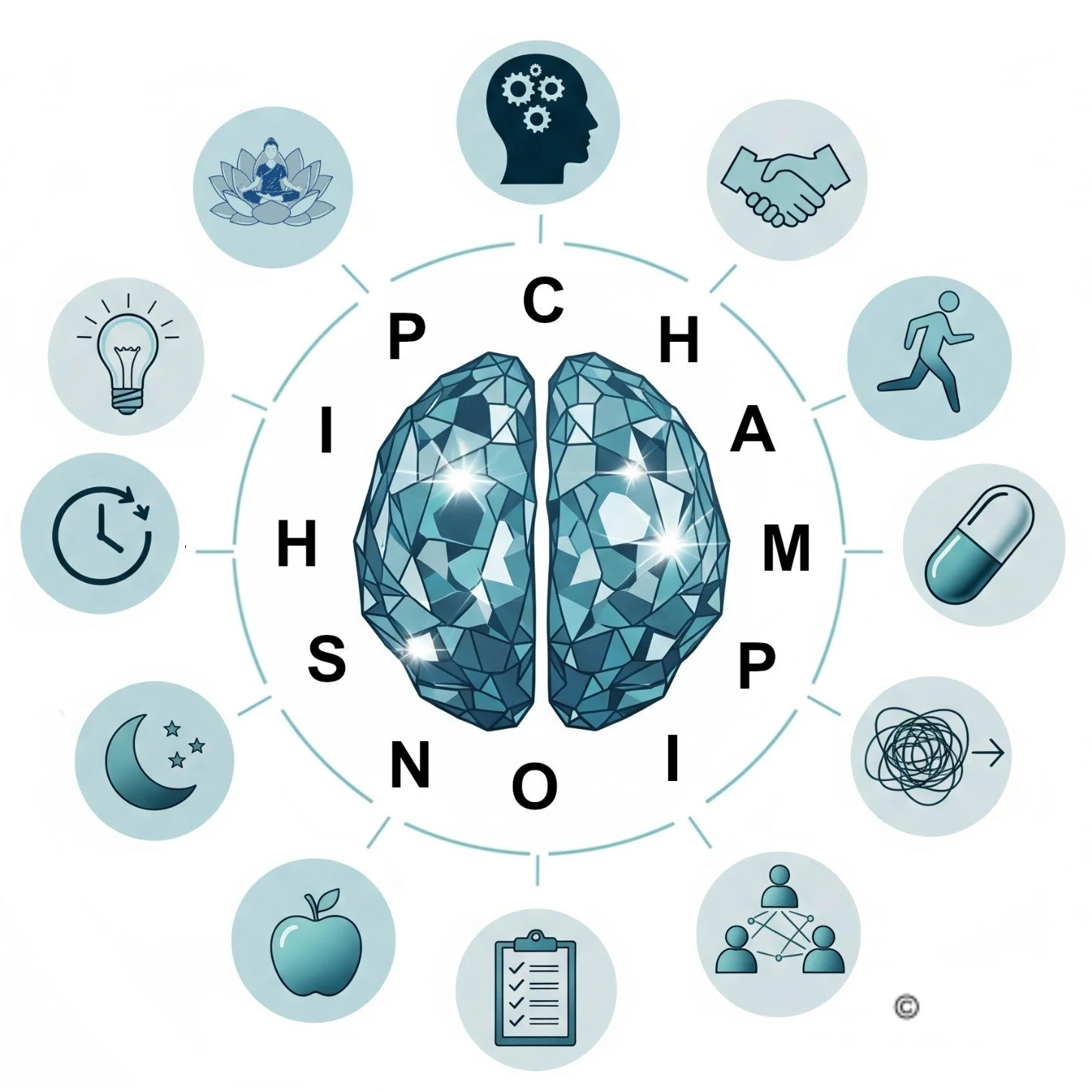
HELP
RESEARCH
Professional Intervention and Targeted Therapies
It is important to seek professional help for symptom management instead of the patient trying to manage it alone. Behavioral interventions help people deal with frustration, anger, and impulsivity.22 Gómez-de-Regil et al22 showed that cognitive behavioral therapy and mindfulness are effective in treating psychiatric conditions and help with emotion management to assist in reframing negative thought processes in TBI survivors.
Following head injuries or with long-term conditions like chronic traumatic encephalopathy, balance can be impaired and fine and gross motor skills can be compromised. A specialized form of physical therapy is vestibular therapy to combat severe vertigo, balance disturbances, or eye movement issues.23 Alsalaheen et al23 showed that by customizing a treatment plan of vestibular physical therapy interventions can normalize vestibular functioning and decrease chronic vertigo symptoms. The efficacy of this rehabilitation can be enhanced through a specialized screening protocol.24 Kontos et al24 determined that a customized oculomotor screening of TBI patients that incorporates specific interventions for eye movement abnormalities has a direct correlation with restoration of gaze stability and reduction in vertigo following concussions.
By working with a cognitive therapist, patients can receive tailored therapies for memory issues, concentration difficulties, and slow mental processing. Executive dysfunctions can include difficulties with higher-level cognitive processes that include planning, organization, and goal management.25 Van Heugten et al25 did a systematic review that proved cognitive rehabilitation improves attention, information processing speed and general cognitive abilities in persons with acquired brain injury. These therapies are individualized to the patient by increasing cognitive demand to keep the cognitive load constant and challenging but not overwhelming to the point of fatigue.
Occupational therapists can be helpful with issues surrounding long-term neurodegenerative symptoms to address functional deficits. This allows patients to remain more independent and live longer without needing constant caretaker assistance by modifying environments and habits. Dawson et al26 saw that the use of client-centered interventions through occupational therapy strategies improved functional performance in persons with a history of brain trauma. Laver et al27 showed that virtual-reality-based therapies can improve motor function and activities of daily living when used alongside traditional rehabilitation in TBI rehabilitation. These therapies help in providing a safer home environment by making safety modifications, teaching how to use adaptive equipment in activities of daily living, and helping to regain independence in daily life and functioning.26,27