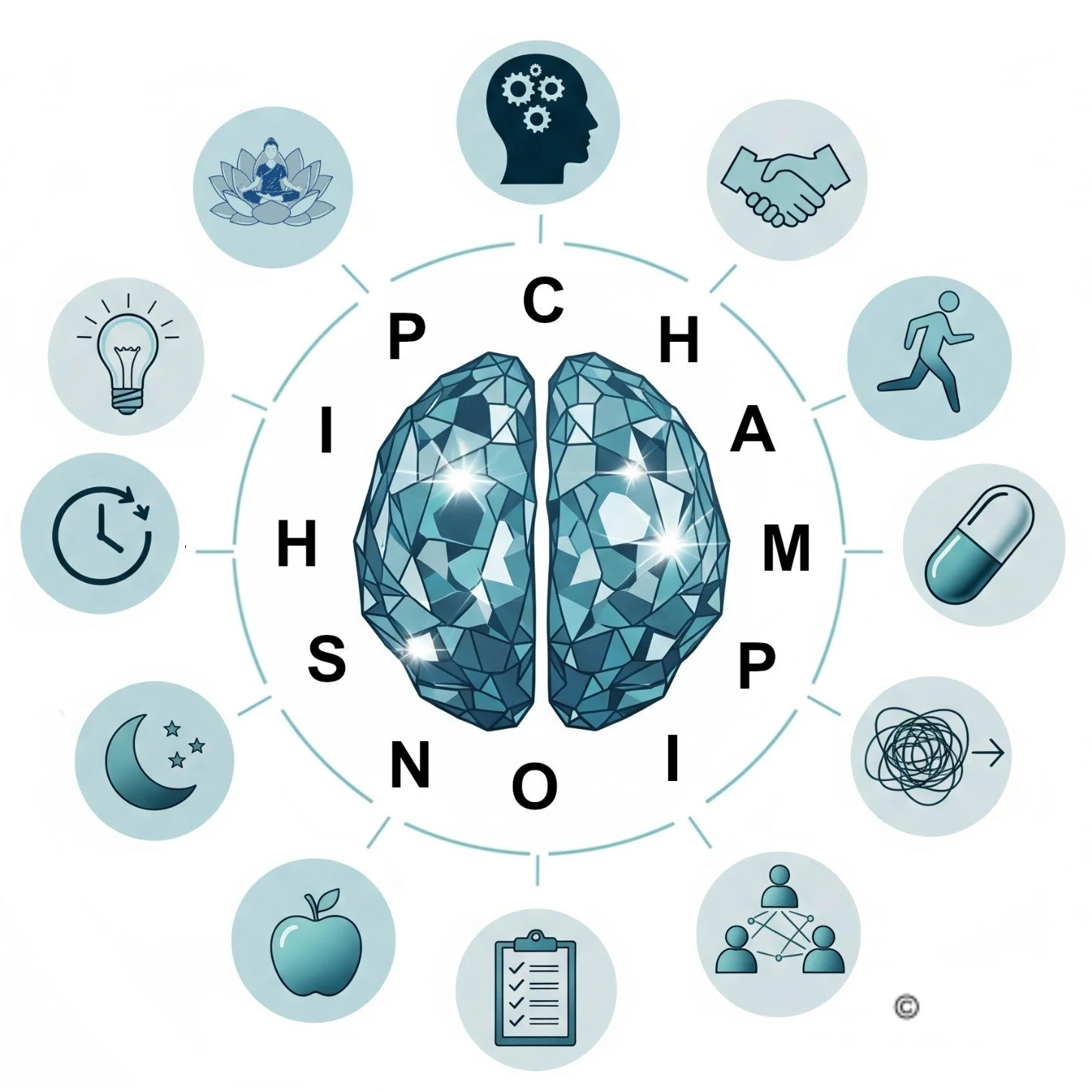
MEDICATION
RESEARCH
Pharmacological Interactions and Intracellular Homeostasis
Werner and Engelhard36 describe how traumatic brain injuries change normal brain signaling pathways and disturb cellular homeostasis. No medication can cure the primary medical trauma that leads to TBI and concussions.37 Pharmaceuticals and supplements can be used as part of a holistic treatment plan for issues like inflammation and cellular stress in addition to headaches, sleep dysfunction, anxiety, and depression.37 Cornelius et al37 analyzed traumatic brain injury and found that by reducing oxidative stress with specific antioxidant treatments, there is decreased neuroinflammation and protection against secondary neuronal damage.
Sleep dysfunction is a common secondary effect of concussions due to imbalances in neurochemistry.38 Shekleton et al38 noted that patients with traumatic brain injury frequently had lower concentrations of endogenous melatonin, which is one cause of their sleep dysfunction. Grima et al39 conducted a randomized controlled trial to test this and found that, properly dosed, melatonin supplementation is beneficial for treating sleep disturbances and restoring rest after traumatic brain injury. When using any supplement, patients should be cautioned that most are unregulated and should ensure that the supplements are independently tested by a nonprofit scientific organization, such as the USP or NSF International, to guarantee quality and purity.
Managing symptoms post-injury requires careful consideration of the types of medication utilized, particularly nonsteroidal anti-inflammatory drugs (NSAIDs). McCrory et al40 provide consensus guidelines for the management of concussions that specifically advise that NSAIDs like ibuprofen and aspirin should be avoided during the acute stage after a traumatic brain injury to avoid a potential risk of secondary intracranial bleeding. Awtry and Loscalzo41 describe the role of aspirin in inhibiting prostaglandin production while reducing pain and inflammation while impacting platelet function. Mazaleuskaya et al42 explain the use of ibuprofen to manage minor pain such as headaches by inhibiting the cyclooxygenase enzymes responsible for causing inflammation.
Post-head trauma, Non-NSAID treatments are advised during the acute window if pain management is needed. According to Ohashi and Kohno43, acetaminophen provides analgesia to patients, acting on the central nervous system by working inside the brain and spinal cord to reduce pain perception. This delivers the benefit of decreasing the effects of pain without the associated negative anticoagulant effects of NSAIDs that can occur during this acute recovery period.43
For patients with headaches outside of the acute window, specific combinations of medications can reduce symptoms. Lipton et al44 conducted a large double-blind study on fixed combinations of acetaminophen, aspirin, and caffeine that determined the mixture was an effective treatment for reducing head pain and other related side effects like photophobia. Lipton et al45 reviewed the data further to show that low doses of caffeine are effective at improving acute headaches as an adjunct to other analgesics due to the effect of caffeine as a vasoconstrictor. This reduction in dilation of cranial vessels reduces pressure and associated head pain.44-46 Echeverri et al46 confirmed the vascular actions of caffeine to further explain this action.
Despite these rare and specific applications, daily caffeine intake that is not metered should be discouraged during brain injury rehabilitation.47 Diener and Limmroth47 describe the potential adverse effects of chronic daily use of caffeine that lead to an increase in the frequency and severity of a patient’s headaches. Drake et al48 also provide evidence of the detrimental effects of frequent caffeine use on the recovery and quality of sleep. Caffeine presents an increased risk for those patients who report anxiety as a symptom following a concussion. Richards and Smith49 demonstrate that caffeine consumption leads to increased anxiety during neurological rehabilitation.