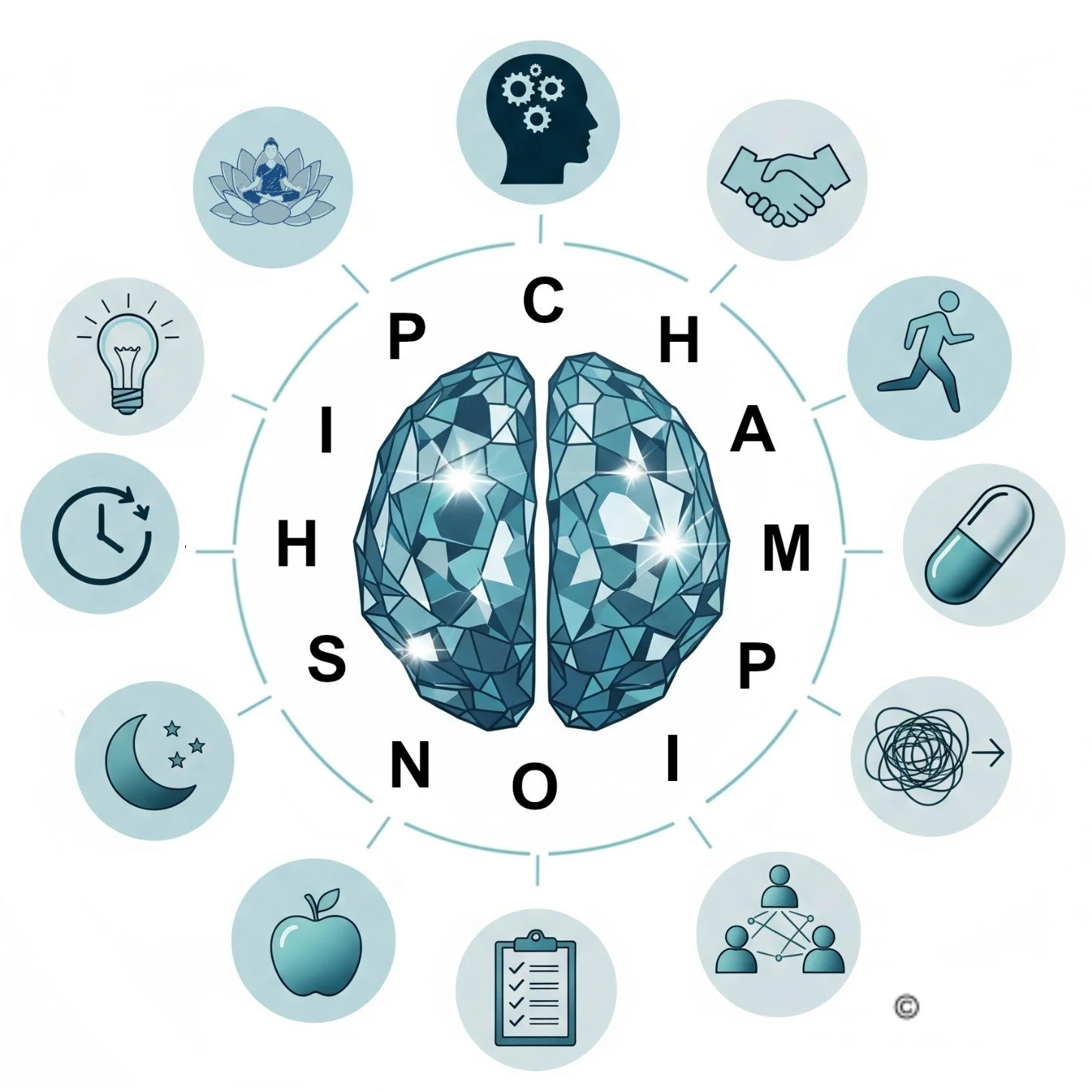
PEACE
RESEARCH
Environmental Control and Sensory Gating
Post-concussion, the brain is constantly on high alert and can present as emotional stress or sensory overload. This can cause an increase of the stress hormone cortisol which can cause or worsen headaches, fatigues, and brain fog.124,125,127,128 Calcia et al124 found that psychological stress directly provokes neuroinflammation by activating microglia, leading to intensifying a patient's cognitive and physiological symptoms. McEwen125 discovered that the neuroflood of stress hormones can increase neuroinflammation, disrupt neural plasticity and interfere with the brain's ability to repair the damaged neural network. A calming neurological and external environment allows the patient’s compromised brain to move resources toward neurological rejuvenation.
mTBIs can cause a disruption in sensory gating, which makes it difficult to tune out background stimulation like noise, lights, or people.126 Through the use of electrophysiological testing, Arciniegas et al125 revealed that TBIs damage neurological gating mechanisms, leading to patients interpreting common environmental stimulation as severely overstimulating. To help patients create a calming environment, clinicians can recommend the use of noise-canceling headphones, sunglasses, a hooded shirt or brimmed hats, and low lights to reduce the neurological burden of sensory overload.
To avoid becoming overwhelmed in conversation, clinicians can teach patients verbal de-escalation strategies, including the ability to ask for a break during a dicussion, change the subject to something neutral, or use a mutual positive memory as a conversational pivot point. Learning to manage conversations is an important skill during recovery because confrontational and emotionally charged situations can flood the patient's overwhelmed brain with stress hormones. Weil et al127 noted that when the brain floods with neuroendocrine hormones like cortisol, it reduces the brain’s ability to tolerate any additional stress and continues to worsen the patient’s symptoms. Simon et al128 observed that excess stress hormones trigger neuroinflammation, prolonging the patient's recovery process and aggravating headache, brain fog, and fatigue.
When dealing with neurorehabilitation, every external surrounding can be a battlefield of stimulation and attack on the senses. Visual simplicity can be used as a component to achieving a peaceful internal atmosphere. Visual noise demands that the brain process and filter information, which requires additional cognitive resources. Lavie129 developed the load theory of attention, which suggests that processing extraneous visual stimulation in a visually cluttered environment detracts from the brain's limited amount of cognitive processing resources. Minimizing the environment to a visually calming space to live and work reduces the patient's exposure to visual distractions and stress, lowering neuroinflammation and cognitive load.
Teaching patients how to use calming movement, breath and focus can decrease a feeling of overwhelm, stress and anxiety. With the single breath meditation, the patient focuses all attention on the sensation of one inhale and one exhale. This creates cranial silence and gives a moment’s break from the constant internal noise and racing thoughts that are frequently experienced by patients with brain injury.129-131 Through literature and meta-analysis, Ulrichsen et al130 found that applying mindfulness interventions is effective at minimizing mental fatigue and decreasing cognitive overload in patients recovering from brain injury.
Continuing in the realm of mindful exercise, the body scan is a practice in which the patient visually runs through their entire body to note any physical sensations without passing self-judgment. The purpose is to notice any feelings of tension, heat or cold in an effort to keep the mind present and grounded to release stored stress. Grossman et al131 showed that mindful practices, like the body scan, direct attention to sensory-based present moment experiences in order to increase the patient’s coping mechanisms.
Another mindful exercise that can be taught to patients is called "mindful movement," which requires the patient to pay attention to everyday movements like walking. Focusing on the sensation of their feet on the floor or the rhythm of breathing during movement, for example, transforms a common activity into a meditation, decreases the patient’s nervous system activity, and increases calmness. In a clinical literature review, Khoury et al132 found that mindfulness therapies, like mindful movement, can provide lasting reduction in stress and anxiety, reducing the patient’s overstimulated nervous system.